

Finding an unexpected lump on your pet is the kind of moment that makes your stomach drop. Whether it turned up during a routine petting session or was pointed out at a wellness visit, a mass on your dog or cat raises real questions about what it means and what comes next. Mass removal surgery is one of the most performed procedures in veterinary medicine, and having a clear picture of what it involves can make the path forward feel far less daunting.
At Stonebridge Veterinary Wellness in Roseville, CA, our doctors bring board-certified surgical knowledge and more than 20 years of experience to every procedure we perform. As a family-owned practice, we take a thorough, personalized approach to surgical care and evaluate each pet individually before recommending any course of action. Our team is genuinely invested in the pets that walk through our doors, and we treat every patient with the same love and attention we give our own.
What Is Mass Removal Surgery?
Mass removal surgery, also called tumor excision, is a procedure in which a veterinary surgeon removes an abnormal growth from a pet’s body. These growths may appear on or beneath the skin, along the body wall, or within internal organs. Some masses are benign and unlikely to spread, while others are malignant and require prompt intervention to protect your pet’s health.
According to the American Veterinary Medical Association, approximately 1 in 4 dogs will develop cancer at some point in their life, with that risk rising to 1 in 2 for dogs over the age of 10. Early identification and timely surgical removal, when appropriate, give pets the best chance at a positive outcome. If you have noticed new or changing growths on your pet, our lumps and bumps screening and treatment services can help clarify what you are dealing with and which options make sense.
What Types of Masses Are Commonly Removed?
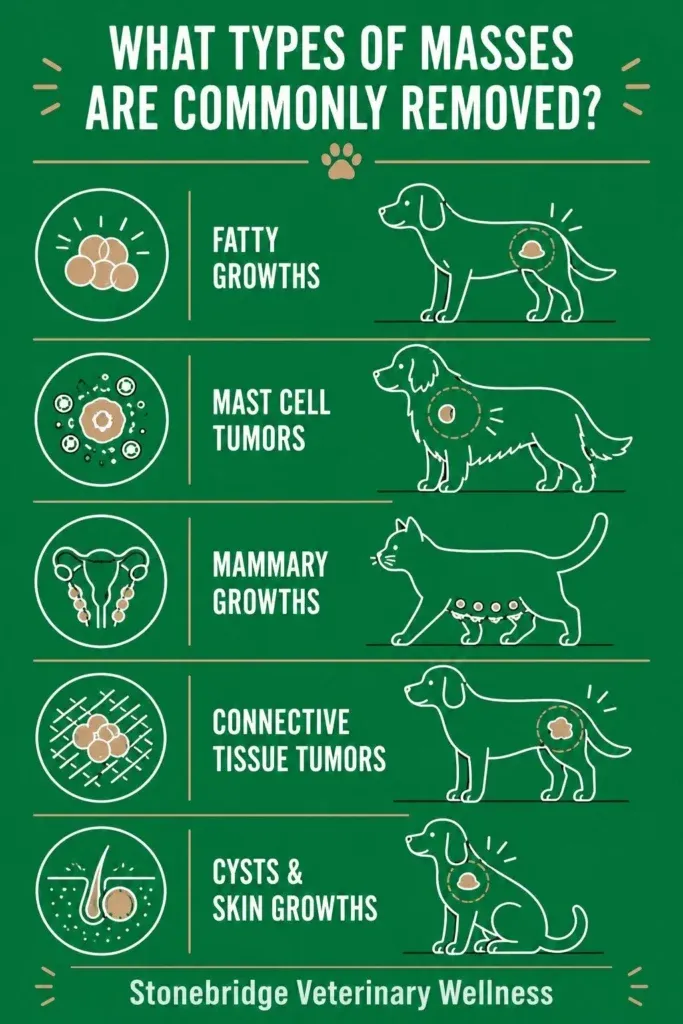
Pets can develop a wide variety of growths throughout their lives, and knowing which types are most common helps you understand what our veterinary team is evaluating when a mass is found. The following are among the most frequently removed masses in dogs and cats:
- Lipomas: Soft, movable fatty tumors that are typically benign but may need removal if they grow large or limit mobility
- Mast cell tumors: One of the most common skin tumors in dogs, ranging from low to high grade and often requiring excision with wide surgical margins
- Mammary tumors: More prevalent in unspayed females and more likely to be malignant in cats
- Soft tissue sarcomas: Tumors arising from connective tissue that tend to require aggressive surgical margins to reduce the risk of local recurrence
- Sebaceous cysts and skin growths: Often benign but worth removing if they become infected, inflamed, or are growing in a problematic location
Our doctors will walk you through every finding before any surgical plan is made. When a mass is confirmed or strongly suspected to be malignant, our oncologic surgery services provide the targeted care that more serious cases call for.
How Is a Pet Evaluated Before Surgery?
Before proceeding with removal, our doctors perform a thorough physical exam and gather as much diagnostic information as possible. Fine needle aspiration, in which a small needle is used to collect cells from the mass for microscopic review, is often the first step. For masses that raise more concern, a formal biopsy may be recommended to confirm whether a growth is benign or malignant and to guide the surgical approach.
Pre-surgical bloodwork and, in some cases, imaging such as X-rays or ultrasound may also be recommended to confirm your pet is a good candidate for anesthesia and surgery. Pets who receive regular preventative care often come into surgical consultations with a more complete health picture already established, which supports safer and more straightforward planning.
What Does Recovery Look Like?
Most pets recover well from mass removal surgery and return home the same day. In the days that follow, your pet will need rest, restricted activity, and regular monitoring of the incision site. Mild swelling and some discomfort are normal early on, and our team will provide clear instructions on wound care, medications, pain management, and follow-up visits.
Masses removed during surgery are routinely sent to a pathology lab for analysis, with results typically returning within one to two weeks. A benign finding generally means no further treatment is needed beyond routine monitoring. For malignant diagnoses, our doctors will discuss whether additional support, including adjunctive radiation therapy, chemotherapy and palliative care options, may help maintain your pet’s comfort and quality of life.
Trust Stonebridge Veterinary Wellness With Your Pet’s Surgical Care
Discovering a mass on your pet is stressful, but having a skilled and compassionate team by your side makes all the difference. At Stonebridge Veterinary Wellness, our board-certified surgeon, Dr. Paster, brings deep surgical knowledge and genuine warmth to every case, from the initial evaluation through post-operative recovery. We are a family-owned practice that treats every pet as if they were our own, and we take pride in helping pet owners in Roseville, Rocklin, Lincoln, Granite Bay, Citrus Heights, and surrounding areas feel confident and informed at every step.
Whether your pet needs a straightforward skin mass removed or a more involved procedure, we are here to guide you. Reach out to our team today.
