

Every bowl of food you put in front of your pet is either working for their joints or against them. Joint conditions like osteoarthritis are among the most common sources of pain and limited mobility in dogs and cats. What your pet eats every day plays a more direct role in that outcome than many owners realize. From supporting cartilage integrity to managing inflammation and body weight, nutrition is one of the most powerful and accessible tools available for protecting your pet’s long-term mobility.
At Stonebridge Veterinary Wellness, our veterinary team draws on extensive experience to help families throughout Roseville, Rocklin, Lincoln, Granite Bay, Citrus Heights, and the surrounding areas make informed decisions about their pets’ health. Our pet nutrition services go beyond general feeding advice, offering personalized dietary guidance tailored to each pet’s age, breed, health history, and individual risk factors so you feel confident in every choice you make.
How Does Nutrition Affect a Pet’s Joints?
Joints are supported by cartilage, synovial fluid, and the surrounding muscle tissue, all of which depend on the nutrients your pet takes in each day. A diet rich in high-quality protein helps maintain muscle mass, which stabilizes joints and reduces the load on cartilage during movement. Omega-3 fatty acids, particularly those from marine sources, may help reduce joint inflammation, a key contributor to pain and reduced mobility in pets with orthopedic conditions.
What a pet eats during their early developmental stages can also shape how their joints form and hold up over time. Puppies fed improperly balanced diets or certain supplements may face a higher risk of developmental orthopedic conditions as they mature, especially in large and giant breeds. Our preventative care services incorporate nutritional assessments as part of routine wellness visits so potential concerns can be identified and addressed before they develop into larger problems.
Nutrients That Support Joint Health
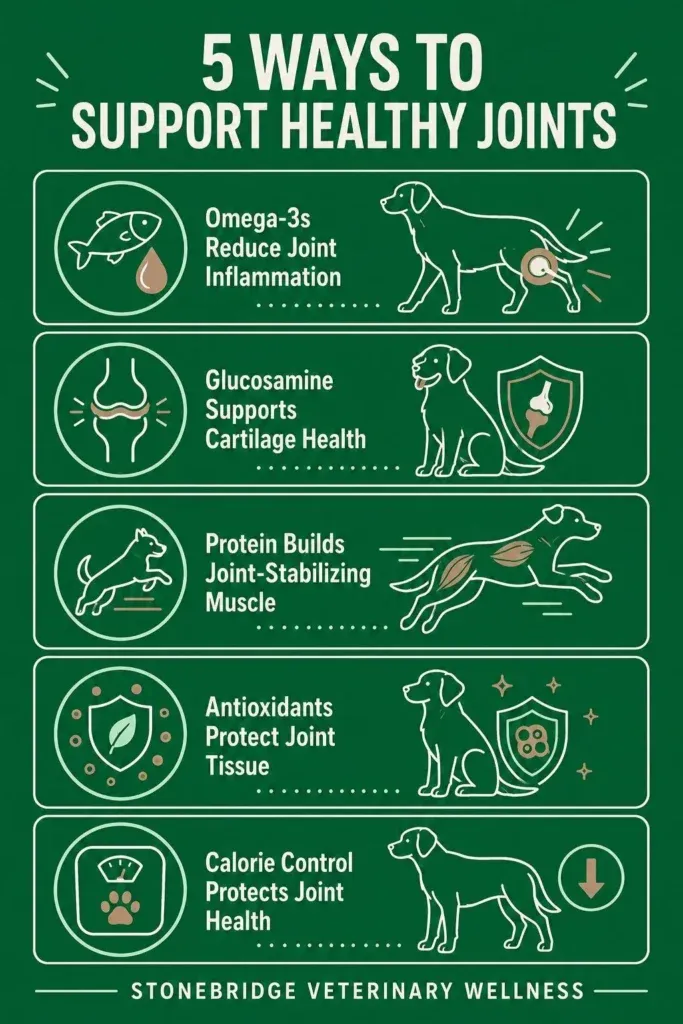
Not every pet food is formulated with joint health in mind, and knowing which nutrients matter most can help you evaluate your options more confidently. Several dietary components have been recognized for their role in supporting joint function and reducing the risk of long-term damage.
Key nutrients to look for in a joint-supportive diet include the following:
- Omega-3 fatty acids: Found in fish oil and marine-sourced ingredients, these may help reduce joint inflammation and support mobility in pets already experiencing discomfort.
- Glucosamine and chondroitin: Naturally occurring compounds that support cartilage structure and may help slow its breakdown over time, available in prescription joint diets or as supplements.
- High-quality protein: Supports lean muscle mass, which stabilizes joints and reduces the mechanical stress placed on cartilage during daily activity.
- Antioxidants: Nutrients such as vitamins C and E can help reduce oxidative stress in joint tissue, supporting long-term structural health.
- Controlled caloric content: Managing daily caloric intake to prevent excess weight is one of the most impactful adjustments available for a pet with joint concerns.
The WSAVA Global Nutrition Guidelines provide a widely used framework for evaluating the quality of commercial pet food, including considerations for pets with orthopedic conditions. Our team can help you interpret those standards and identify whether your pet’s current diet is providing the support their joints need.
The Role of Weight Management in Pet Mobility
Carrying excess body weight is one of the most modifiable risk factors for joint disease in pets. Even a small amount of extra weight can increase the load placed on hips, knees, and elbows, possibly accelerating joint degeneration and increasing daily discomfort. For pets already managing hip dysplasia, cruciate ligament disease, or other orthopedic diagnoses, maintaining an optimal body condition score is a central part of any care plan.
Effective weight management involves more than reducing food portions. Metabolism, activity level, underlying health conditions, and the caloric density of your pet’s current diet all factor into the equation. When joint disease is present or suspected, our team may also recommend a consultation with our orthopedic surgeonry team or refer to pain management services to build a fully integrated approach to your pet’s care.
When to Talk to Your Vet About Your Pet’s Diet
The earlier a conversation about diet and joint health happens, the more options are available. If your pet is a large or giant breed, has been assessed through PennHIP joint screening, or is approaching their senior years, a proactive discussion about nutrition is worth having now. If you have noticed your pet hesitating on stairs, slowing down on walks, or seeming stiff after rest, those observations are worth bringing to your veterinary team right away rather than waiting to see if things improve on their own.
Nutrition can also work alongside medical treatment for pets already experiencing joint discomfort. Anti-inflammatory diets, weight management programs, and targeted supplementation can all complement other forms of care to improve your pet’s day-to-day quality of life. Our team consults with a veterinarian certified in pain management to help develop the most effective and compassionate protocol for each individual patient.
Partner With Stonebridge Veterinary Wellness for Your Pet’s Joint Health
At Stonebridge Veterinary Wellness, we are a family-owned veterinary practice where pets are treated as members of our extended family. Our team brings together extensive experience and a genuine commitment to evidence-based care, serving families throughout Roseville and the greater Sacramento region.
Whether you are getting ahead of a potential joint issue or searching for answers about a pet already in discomfort, we are here to help. Contact us today to schedule a nutritional consultation or wellness visit with our team.
